.png)
Bad Theology: Busted
This is the podcast of the Institute for the Study of Christian Zionism.
https://studychristianzionism.org
Got a question about the podcast?
Reach out to us via email at BTBusted@studychristianzionism.org.
Bad Theology: Busted
Episode 6 - Christian Zionism in the US Black Church
Use Left/Right to seek, Home/End to jump to start or end. Hold shift to jump forward or backward.
Today we’re excited to connect with Josiah R. Daniels, Rev. Keyanna Jones Moore, and Rev. Dr. Reggie Williams. During our conversation this month, we will dive deeper into how Christian Zionism shows up in the spiritual and political realities of Black Christians in the United States.
Resources mentioned:
- Bonhoeffer’s Black Jesus: Harlem Renaissance Theology and an Ethic of Resistance by Reggie Williams
- The Cross and the Olive Tree: Cultivating Palestinian Theology amid Gaza edited by John and Samuel Munayer
- Jesus and the Disinherited by Howard Thurman
- The Message by Ta-Nehisi Coates
- One Day, Everyone Will Have Always Been Against This by Omar El Akkad
- Perfect Victims: And the Politics of Appeal by Mohammed El-Kurd
- ‘I’m so dehumanized’: Journalists say U.S. newsrooms treat Palestine with fear and contempt by Laura Albast via Prism Reports
- Want to Love Your Neighbor? Grieve With Them By Elom Tettey-Tamaklo via sojo.net
- What is neutrality bias, and why do we need to address it? by Gina Baleria via the Wayback Machine
- Department Press Briefing – February 14, 2024 Matthew Miller, Department Spokesperson via state.gov
- Georgia International Law Enforcement Exchange (GILEE)
- Highlander Folk School
- Shalom Hartman Institute
- Video of “flying checkpoint” in North Georgia
- The Wayback Machine
- John Coltrane: A love supreme
The ISCZ is the primary resource for the study, critique, and response to Christian Zionism.
Friends of Sabeel North America
Seeking justice and peace in the Holy Land through education, advocacy, and nonviolent action.
Disclaimer: This post contains affiliate links. If you make a purchase, I may receive a commission at no extra cost to you.
Credits:
Original music: Karl Saint Lucy & Danny Frye (feat. Rev. Dr. Munther Isaac) - “The Path Forward”
Produced, written, and performed by: Karl Saint Lucy (ASCAP) & Danny Frye (BMI)
Featuring sampled speech by: Rev. Dr. Munther Isaac
Drums, mixing, and mastering: Danny Frye
Keyboards and programming: Karl Saint Lucy
Logo design: Dee Roberts
Hello and welcome to Bad Theology Busted, where we challenge the dangerous theology of Christian Zionism in all the places that it hides. This is the podcast of the Institute for the Study of Christian Zionism. My name is Jesse, and I'm joined by my co-host and my friend, Dee.
SPEAKER_02Thanks, Jesse. Today we're excited to connect with Josiah R. Daniels, Reverend Kiana Jones Moore, and Reverend Dr. Reggie Williams. Solidarity between black Christians and Palestine is not new. From Reverend Jesse Jackson to political activist and author Angela Davis, there is a long-standing history of black prophetic witnesses who have stood in solidarity with Palestinians, even as other voices have loudly insisted that the Black Church stand united for Israel.
SPEAKER_03During our conversation today, we will dive deeper into how Christian Zionism shows up in the spiritual and political realities of Black Christians in the United States.net.
SPEAKER_02As a journalist, his coverage areas are primarily identity, religion, politics, and class. In 2023, NPR's weekend edition interviewed him about a piece he wrote criticizing an ad campaign for spending millions of dollars to rebrand Jesus via TV spots. He is especially interested in the genre of narrative journalism. In all his coverage, he prioritizes fairness, accuracy, and journalistic integrity. He went to Palestine in 2012, 2024, and again in 2025. Personal narrative is so powerful. Josiah, you recently returned from a solidarity and witness delegation to Palestine. Having gone and seen, can you share with us and our listeners what your Kairos moment was? Uh, the moment you realize the role that you have to play, particularly as a journalist in helping to end the illegal occupation of Palestine.
SPEAKER_04Yes. Thanks so much for having me on. I'm very excited to be here. First, I just want to say that I'm extremely grateful to be able to work at a place like Sojourners that allows me to freely speak about why I believe Palestinian liberation is so important. That being said, not everything uh that I say today will be representative of Sojourners. And so today I'm here, of course, as a journalist, but I I'm not speaking on behalf of Sojourners. That being said, you know, in terms of in terms of a Kairos moment, I I wouldn't say that there's like one moment. I would say it's more of a cumulative effect. I went to Palestine for the first time in 2012, and I went as a college student who really didn't know a lot about Palestine or Palestinians. I really didn't know anything about it. And so when I went then, obviously it was very different than when I would return in 2024 and 2025. But in terms of of storytelling and in terms of like where I view my work intersecting with the need to talk about the genocide that's been happening, talk about the illegal occupation. I don't actually really know if there's anything that I need to do other than this, which is emphasize the importance of Western journalists listening to Palestinian journalists. Emphasize the importance of Western journalists working with Palestinian journalists, whether that's on the ground in Gaza or on the ground in the West Bank, and uh not figuring out ways to sort of, you know, like tell their stories, which is something that we here in the West really like to uh talk about very paternalistically. But we have to figure out a way to ensure that Palestinians are telling their own stories. Uh, this is something that Tanahastico talks about in the message, right? He says, you know, Palestinian liberation and and Palestinian stories are not ultimately going to be told by people like me. They're ultimately going to be told by Palestinian people themselves. This is something too, you know, again, I love Sojourners. It's great working there. But something that Sojourners has to improve on, we need to do a better job of getting Palestinian writers and journalists to write about Palestine. This is this is something that we really have to improve on. So I'll let that be my answer. I hope that uh satisfies.
SPEAKER_03Reverend Kiana Jones Moore is an ordained minister, political and social justice activist, and community organizer. She serves as co-pastor at Park Avenue Baptist Church in Atlanta. Reverend Kiana is an abolitionist in the tradition of Jesus and has been an active member of the Atlanta Multi-Faith Coalition for Palestine since its formation in late 2023. Drawing connections between the development of cop cities across the U.S. and the illegal detention of Palestinians in Israel, she has advocated to the highest levels of power, including a speech at the United Nations in Geneva about the violence of policing in the United States. She consistently works to educate, engage, and empower black communities, both locally and on a global scale. Kiana is the wife of Jared R. Moore and mother to their five unique and extraordinary children. Kiana, I'm really happy you're here with us today. Describe for me how you first came to understand justice work as imperative for Christian life and ministry. Specifically, when and how did you first come to recognize black struggles in the US and Palestinian struggles as being intertwined?
SPEAKER_01I've always understood as a Christian that justice is the work of Christianity, that the message of Jesus was always justice. And more specifically, when I joined the movement to stop Cop City, I understood the connection between the violence of settler colonialism in Palestine to the violence of settler colonialism here in the United States and here in Atlanta more specifically. We were fighting against the construction of Cop City, which some people refer to as the Atlanta Public Safety Training Facility. But public safety is the last thing that that training facility was built for. That training facility came to fruition literally from the mind of a former police chief who visited Israel and saw the way they surveil Palestine. They saw Little Hazza and they were impressed by that level of surveillance and thought that they should bring not only that level of surveillance to Atlanta, which is now reserved in the United States, but they also wanted to mimic the Little Haza. And that is how the model for Cop City came into being. So from the time that I began to say the words stop Cop City, I understood that we are connected to Heza just as much as children are connected to their own mothers, that the violence of settler colonialism knows no borders, and that when we see it in one place, we see it in other places. And as clergy, particularly the black church, I saw how the black church turned their backs on people who were fighting against Cops City. I saw how it did not matter, even if those same clergy members had members in their churches who had been the victims of police violence. Even if they had families who had been touched by police murder as a result of what settler colonialism is and how it proliferates itself within society, they would not stand up against Cop City. And those very same clergy members were loath to cause call for a ceasefire when it came to the occupation in Palestine. So understanding that the Black Church has long been a part of the Black misleadership class, particularly in the city of Atlanta, it was incumbent upon me to make sure that my voice was always heard standing for the same people who Jesus would stand for.
SPEAKER_02Reverend Dr. Reggie Williams is associate professor of black theology at St. Louis University in St. Louis, Missouri. Williams received his PhD in Christian ethics from Fuller Theological Seminary in 2011. He is the author of Bonhoeffer's Black Jesus, Harlem Renaissance Theology and an Ethic of Resistance, which was selected as a choice outstanding title in theology in 2014. The book examines the impact of exposure to the Black Church in the midst of the Harlem Renaissance on Dietrich Bonhoeffer, who was killed by the Nazis in 1945 for his resistance. Williams' research interests are Black arts, Black studies, Black theology, Black church studies, and Christian ethics. He is a board member of the English language section of the International Dietrich Bonhoeffer Society, former board member of the Society for the Study of Black Religion and the Society for Christian Ethics. Reggie and his wife, Stacy, are the parents of a son, Darien, and a daughter, Simone. Reggie, you've also recently traveled to the region, very recently. Can you share with us an experience that you had on the ground that left you changed as a person or altered the way in which you engage in the work of doing theology?
SPEAKER_00Certainly. You know, it's really a joy, a privilege to be here with you and with these esteemed guests that you've got here. I mean, this is a wonderful, wonderful conversation and a hugely important one. I went with uh some friends, most specifically, another friend who's a professor at Yale, um, who we've been in a conversation with some with Palestinian Christians on the ground there for some time now. One of the Palestinian Christians that we were um in conversation with just published a collection of essays that goes under the title The Cross and the Olive Tree. John Munier and his with his little brother Sam. We were in a sustained conversation with them for three years. Then we made we had this opportunity through Sabile to go and see them face to face where they live. Um and it I've been there, I should mention, 2016 and 2017 as a guest of a program run by the AJC. And we had the opportunity to talk to Palestinians at that time as well. It was always met by either with a Jewish person alongside, demonstrating how there are two competing narratives in the land. This time there was no filter. This time they weren't trying to convince us of anything or to demonstrate the complexity, they were just showing us Palestinian existence. It was um I was already very troubled before we went to the home of a man uh named Zaher. And I forget the name of the town that he was living in, Zaheer. Um, but he's from Florida. They were there for the summer uh with family in their property in a town that was primarily Christian Palestinians. Um Zaheer had been there with his family for three weeks at this point of uh a couple months' stay. Three weeks, they get a knock on the door at three in the morning, and there's Israeli defense forces there at the door. It's dark. They're bright lights and guns. And they ask the man about the people in his house at that time in the morning, as he's telling telling them about his family, his wife, and his kids. He gets to his 15-year-old son, Mohammed Zaheer. And they say, Can we see him? He escorts the soldiers with their guns and bright lights into little Mohammed's bedroom and wake him up, startled and scared, with these two people armed with lights in his room. And then they ask him questions in the room and they lead him out, and they zip tied his hands behind his back and blindfolded him and took him to prison. When we were sitting there in Zaheer's house, he hadn't seen or heard his son in five months. If you have kids, you know how absolutely traumatizing an experience like that was. First to see his son handcuffed, zip tied, or with hands behind his back, and blindfolded and taken away by authorities with guns. He was a shell of a man sitting in front of me. How do you make sense of that? So um yeah, it was a sequence of events, really.
SPEAKER_02There's a lot Yeah. I had a very similar experience when I went in this last March um and heard a very similar story that I think it lives in my bones. Still, like I I literally feel it every waking moment of my life. So thanks for sharing that. I love that in this moment we're kind of coming full circle to something that was mentioned in an earlier episode of the podcast. In episode two, uh, Reverend Dr. Donald Wagner invoked the status confessionis language of Dietrich Bonhoeffer. While studying at Union Theological Seminary in New York City, Bonhoeffer was deeply impacted by his immersion in the black community of Harlem, particularly the Abyssinian Baptist Church. Reggie, in your book, Bonhoeffer's Black Jesus, you write about this experience and how it untethered Bonhoeffer from the false and harmful connections between white supremacy and Jesus. Echoing the theology found in Howard Thurman's Jesus and the Disinherited, this experience of Bonhoeffer's is what made him become a Christian and discover the personal cost required to walk in true solidarity with those that are oppressed. Can you describe for us what this cost of solidarity with Palestinians can look like and why the church must meet this moment with a theology that articulates Jesus' example of being with those on the margins of society?
SPEAKER_00Sure. Yeah, so his time at Abyssinian Baptist was hugely influential for him. And to say that he became a Christian would say this: he became more pious in his faith as a result of that. That move changed him really from what might say, he says, abstract concrete to looking for concreteness in his relationship with Christ, would we say? Um and that solidarity. I'll tell you, I'll tell you a story about him. Friend of his named Miles Horton, who was the co-founder of the Folklander School in Tennessee that was training people during the Civil Rights Movement. Miles Horton said that one day after church, he rattled he found Dietrich in the lobby of Union Seminary, the dorms, and that he was untypically emotional, which is not common for his logic typical logical emo on German demeanor. He was really emotional, talking about his experience at church and how he felt like there's only the only real Christianity he met in the United States was at the black church. Miles says he thinks he witnessed on that day the experience for him that brought him into a kind of a solidarity with oppressed people that led to his death. Early death at age 39. That's what Miles said. What does it mean to recognize solidarity with harmed people? Uh with people living in government arrangements that see cruelty and oppression. And they would not oftentimes it's funny, they don't say it in that way. They talk about peace, but it's experienced not as peace, but this is violence. This is cruelty. Peace is just silence. Peace is apathy. Peace is uh complicity. It is um compliance. And if for people who accept what the practices of cruelty and really human hierarchy, they put they accept their place in a human hierarchy that has an apex that is demanding a kind of organization of reality around their subhuman status. Peace, as they would describe it, is acceptance. And for a people who choose not to accept that, then what does it look like uh to be in solidarity with them? It means to go against the powers and the social structures that have arranged human being in a hierarchical manner. And they have they've got you know authorities, they got guns, they have money, they have the educational, uh social, political apparatus. I mean, in short, that's a risk. We always take a risk, but there is no changing things without risk.
SPEAKER_02Thank you so much for that. We have a person who's local to Atlanta who always says that in order to be the church, you have to risk something. Um, and so that reminds me of that, but thank you for sharing that.
SPEAKER_03Kiana, I'm gonna turn to uh you now. In a recent interview with Essence Magazine, you state Palestine is important because the US imperialism that funds the Israel Israeli military to attack Palestinians is the same US imperialism that makes it possible for police to terrorize black neighborhoods here in the United States. First, can you unpack this statement for us? And second, what role does Christian Zionism as an ideology and a political movement play in enabling and reinforcing such a state of affairs?
SPEAKER_01I'd absolutely love to unpack that. Very simply, militarism abroad is a thing. Militarism at home is a thing. The Congressional Progressive Caucus Center has an entire study on militarism at home as it relates to militarism abroad. And I was fortunate to join them in 2023 and in 2024, talking about deadly police exchange programs. These deadly police exchange programs are programs such as the Georgia International Law Enforcement Exchange, which operates out of the Andrew Young School of Public Policy, right here at Georgia State University in Atlanta, Georgia. And what takes place within the Georgia International Law Enforcement Exchange is that law enforcement executives from places like Atlanta will actually. Go to Israel and they will train with the Israeli occupation forces. The same tactics that they use against Palestinians will be then the same tactics that the Atlanta Police Department, for instance, will bring back home. And they will use them against people here in the United States. I witnessed this firsthand as I was on the campus of Emory University at an encampment that was set by students to protest the genocide and the occupation. And I saw Atlanta police officers and Georgia State Patrol members kettling protesters. And in the same way that George Floyd was murdered, for the world to see with a knee on his neck, these are tactics that have been learned from the Israeli occupation forces. So when we talk about U.S. imperialism being at home and abroad, that's exactly what we mean. We mean this literally. The same things that happen in one place are also happening here. And people have to remember that settler colonialism is a component of imperialism. So the same way that Turtle Island was setled by people who came here and claimed this land for their own, the same thing has happened in Palestine. There are settlers there who have claimed the land for their own, and they've done this through systematic oppression and it's been enforced by militarism. When you think about how it is that Christian Zionism can promote something like this, you don't have to look much farther than the church, because many times in church, we are taught that we are to obey those people in authority. We have to obey those that have rule over us. After all, the Bible itself says, slaves, obey your masters. And there is a lot in the Bible about obedience. And when we think about the society that we live in and the way it is that even in school, as we grow up, we are taught, hey, police are your friends. We have to obey them. However, what we've begun to see, and I think that people are seeing it more and more these days, is that the authority has been abused. And I don't know what else would have come out of a system that was born out of imperialism, the Etler colonialism, really the proliferation of chattel slavery, because slave controls began. And those are the things that evolved into this system of policing that we have. So the current system of policing under which we operate here in the United States goes all the way back to chattel slavery. And if we have a theology and really an ideology that tells us that slavery is okay, then of course that would reinforce that same system that would tell us that occupation and genocide are okay because there is a level of dehumanization that's at play in both instances. When people are not seen as human, when you take away their humanity, it's easier to oppress them. And Christian Zionism wants us to blindly agree that Israel is God's chosen people. So whatever is done to anyone else by them is okay. I think that as a political movement, Christian Zionism has really wanted to reinforce the lack of humanity in Palestinians. So that way it has made it very easy for the genocide to carry on. It's made it very easy for people to see Palestinians as never being innocent, even because the same way that a Palestinian child can be arrested for throwing rocks, my child here in the United States can be arrested for something as simple as disobeying a police officer. Right here in Atlanta, Georgia, there is a man, Deacon Johnny Holliman, who was murdered by an Atlanta police officer because the officer felt disrespected because Deacon Holoman refused to sign a traffic ticket. That led to his murder. But this is the very same ideology that makes it so that children are routinely arrested, jailed, and abused simply at the accusation of throwing a stone.
SPEAKER_00That was really disturbing, um, Kiana. That was really, really disturbing. So, so well said. Oh my gosh. One of the things that just ripped me up over there, much the same way as here, is how they treat kids.
SPEAKER_01Yes, yes, yes. That is, I I did not go into that more because I will go all day when I talk about it, although I probably should have. I mean, I I can't believe it when I I go into public schools or go around there. I I homeschool my children because I I just refuse to deal with that. But for those parents who do send their children to school, it's the same way, you know, that my son will never be seen as innocent the same way that a Palestinian child will never be seen as innocent. And something like Cop City and the proliferation of cop cities around the United States are making it easier for that to be and for the rest of society to see it the same way. We're moving into an area of surveillance that I don't think people are ready for. But one thing that I cautioned the United Nations about when I went this year in August for the Universal Periodic Review pre-session is that the level of surveillance in the United States is beginning to mirror the level of surveillance that Israel does to um Palestine, and that if we are not careful, we are going to find ourselves in the very same state. And also, I'm just waiting for the checkpoints to pop up because that's really where we're moving to.
SPEAKER_02Um, something that is always shocking to me is that in my environment here in Atlanta, people are always like shocked and surprised about what is happening here in Atlanta. And every time I hear someone with shock and awe about how awful things are, I can't help but just retort to them that like we allowed this to happen in other places across the world. Why are you surprised and shocked that it's happening here? You know, they're calling this the, you know, the imperial boomerang is like boomeranging to the extreme right now. And I think that, you know, you just mentioned checkpoints, like waiting for checkpoints to show up. The flying checkpoint is already here in the United States. So, like contextually for our listeners, flying checkpoints in Palestine are where an Israeli military vehicle just like pops up in the middle of a road someplace and cuts off traffic and then spends an absolutely dehumanizing and degradating amount of time inspecting each and every vehicle on either side of the military flying checkpoint. That's already happening. Like it's already happening with ice vehicles and other things like that here in the States. So, and and policy-wise, something that I think is strange is that on a lot of university campuses now, as we're talking about what happens if ice shows up on our campus, the policy directive is to call the campus police. And I just, I, in my own context, having witnessed live and in person what happened in April of 2024 on the Emory University campus and the response of the militarized police force of the Atlanta PD, the Georgia State Patrol, and the Emory PD. I the cognitive dissonance that is needed to say, oh, if I comes to our campus, we call campus police to deal with that is it's crazy. It's insane.
SPEAKER_03Yeah. And yet, if I could just we talk about the the imperial boomerang, like this has been happening overseas for decades. And yet, this is also the land of American apartheid, of Jim Crow, of people looking to us for the example. And so it might be people like me who look, what? This can never happen in America, but you know what? I mean, this is just that's not the reality, is that there's a boomerang, but only because it's just affecting people who didn't previously necessarily feel it as much, perhaps.
SPEAKER_00I wonder if it's much as much a boomerang as it is just the tradition of this of this ideology. It's not it's not like it's coming back after it's not been here or something. You know, this has been the the what we're talking about or really is the function of a way of understanding reality. And this way of understanding reality is is is as old in this country as its origins. Human beings are moral people, we're moral. We like to have an excuse for why we do things, and the excuse that we have for the practices of buying and selling people is alive. The can't they outlawed that, but they couldn't kill the idea. And the idea, the way that people think about human life is just hierarchical, and then and the and the birth of the nation state is still done in around the notion of the empire and this new idea that we are made up of races and types. And you know, this type lives here, and that type lives there, and the types are ideals. This in the black church, I think, is what we're talking about, right? The way that the I mean the black church in the United States offering its support for the way this is arranged in Israel-Palestine.
SPEAKER_02Yeah, you know, not being in the black church myself and having been taught systematic theology by the late James Cohn. I actually had a conversation with somebody this summer who reminded me to not feel awkward about this. But as someone who did study with James Cohn and who has benefited from a deep well of Black liberation theology and womanist theology, oftentimes I find that I am introducing womanist theology to Black female identifying students at Cancler for the first time. It's me delivering that information to Black students as a new thing that they don't, they didn't know that there are, you know, womanist theology voices in the Black church that can like speak to their experience. And I find it both a gift and a privilege to be able to do that myself. And also it's it makes me pause to wonder um all of the different reasons behind the why that is like the why I'm the one who is delivering black prophetic theology and liberatory theology to Black students in my position as a theological librarian for the first time. And just makes me sit with it.
SPEAKER_00You're introducing the theo the academic language.
SPEAKER_02Yeah.
SPEAKER_00But the presence of woman is theology or or a black uh black woman's know-how and prowess in the community has always been there.
SPEAKER_01Absolutely, and that's in the community, but in the black church, that is the place where black women are least free. That is the place where liberation is elusive for black women. And when you talk about womanist theology, the black church as a person who grew up in a black church, an original free will Baptist black church, that is, I wouldn't even say the last thing that you would hear. You would never uh hear that in that black church, because the black church is extremely Zionist. The black church is uh Israel is God's chosen people. We don't question, we are to pray for the peace of Israel, we are to make sure that everything we do ushers in the glory of Israel, that all that we do as a church will uplift the narrative that Israel is something that you don't question, you don't dispute, you don't refute, and you definitely, definitely don't ever oppose Israel. You have to support this nation because they are God's chosen. And anything antithetical to that is heresy.
SPEAKER_00Yeah, no doubt, no doubt, no doubt. So I grew up in an evangelical church. I moved to a specifically black church when I could, when I was a teenager. God's Throne Missionary Baptist Church, where black women couldn't go up on the pulpit at all. They had to go, they had to speak from the pulpit on the side, you know, with the white blouse and black skirt um and the white gloves. But she was still the pivotal figure in the congregation. That church wouldn't run without those black women. They it wouldn't run. It couldn't. And whatever you heard from the pulpit, still the wisdom was done in the community in a different level. Um, and that was the sisters. We all know we know that. They were the reason why the church was really standing, in fact, because it was primarily black women in that congregation.
SPEAKER_01Yes, like there's that weird dichotomy of women are extremely oppressed in the church, but they actually do run the church. Right. We don't want to be seen, but we definitely want your labor. We definitely want your wisdom. We need it, we just can't promote it, we can't highlight it, you can't be in the forefront. And then we want to make sure that we continue to teach people from these narratives of a God that told some people to go into a camp and kill everybody in there. Don't leave anybody alive, not even the women and the children. And this is what we use to justify this current genocide. This is what we lean on when we say that God has chosen these people for this time. And this is what they're supposed to do because remember when in the Bible God said you go in there, you take everything, you kill everybody, and leave nobody breathing. So somehow this translates to this genocide is justified because this is what God calls for.
SPEAKER_02As a librarian who like specializes in media literacy, a constant dilemma that I return to always is this concept of neutrality. Similarly, in journalism, there's a phenomenon called the neutrality bias. In a 2021 article by Gina Belleria, which has now been made unavailable online through its normal publication place and can only be found on the Wayback Machine. Valeria describes this practice as a type of bias in which journalists and news outlets try so hard to avoid appearing biased that they actually misinterpret the facts in their coverage. In his book, One Day Everyone will have always been against this, Omar El Akkad writes that the contradiction at the heart of journalism and adhere to at almost every major newspaper, is that the journalist cannot be an activist and instead must remain allegiant to a self-erasing neutrality. Back in November 2025, in conversation with Hannah Mushabek, one of the sisters who co-owns Interlake Publishing, the only Palestinian-American publishing house in the United States, and Sim Kern, the New York Times best-selling author of Genocide Bad, Sim rightly stated that in journalism, any effort to remain neutral only serves to reaffirm a status quo and favor the oppressor. So, Josiah, I'd like to hear your thoughts on this. The thoughts have the dangers of a both sides is as it relates to stories around Palestine. And then also, like, what do we do with this ethos of neutrality that is so often weaponized to keep people from being confronted with uncomfortable facts?
SPEAKER_04Yes, I mean, uh, so the thing is I am again lucky enough to work for a publication that has always emphasized the need for Palestinian self-determination. And also the publication that I work for is a progressive Christian publication. And so therefore, we have not only standards that we adhere to as a journalistic outlet, but we also have values that we adhere to. And one of those values, of course, is social justice. Everyone has values, right? Everyone tells us everyone on this call, everyone listening to this podcast, we all have values. Everyone working at the New York Times has values, right? Uh, neutrality in and of itself is a terrible value, and in fact, too, it also conflicts with other values. Like I think most people on this call and most people listening to this episode, and again, even people at the New York Times, people at Fox News, all of us value to some extent or another fairness, all of us value to some extent or another, justice. And if you value something like fairness and justice, and then you are talking about neutrality, specifically in terms of needing to remain neutral when reporting on Israel-Palestine, things are going to be in tension there, and ultimately you're going to end up with something completely incoherent. I'm really glad that you mentioned uh Omar El Akkad, uh, his book, which I encourage everyone to buy and read, it actually just won uh the National Book Award. The other book that I would really point people to in terms of uh deconstructing this idea of journalistic uh neutrality would be Perfect Victims by Muhammad El Kurd. But one of the things that I really love that El Kurd does, and uh El Akkad does this too in his own way, but both authors ultimately critique the idea of journalists approaching something with this neutral lens when in reality, right, the United States, we are the main ally of Israel in terms of like military support. And so this idea somehow that journalists who are working at these legacy media outlets like the New York Times or like the Washington Post, the idea that they are going to report truthfully and accurately uh without also critiquing the military-industrial complex, I mean, this is this is laughable. We've seen how journalists at these outlets are compromised, how they have what we call you know conflicts of interest. In fact, uh, I want to point people to something that uh was just published today at Sojourners by an author, uh, and his name is Elome Tete Tamaklo. But Alome uh just published uh a piece today, and it is largely about grief and who we reserve our grief for. The name of the article, it's an opinion piece, is Want to Love Your Neighbor, Grieve with Them. And one of the things that Alom points out in this piece is the way in which the media has actively participated in dehumanizing Palestinians. And again, just for people who maybe don't just want an opinion piece, which of course this is uh what Alom's piece is, but for people who maybe want something that is more investigative, I would point them to a prism investigative report. And this piece is uh authored by Laura Albast, and the name of it is I'm so dehumanize. Journalists say U.S. newsrooms treat Palestinians. With fear and contempt. This was published in September 2025. And again, it talks about just how compromised US newsrooms are when it comes to media bias for Israel. And so media bias is a real thing. And I think that the way to solve that bias is not to like condescend and be in a constant state of arguing with people, but I think it's through writing and presenting uh the reality through data, through firsthand accounts of Palestinian journalists and through conversation with people and saying, you know, this is a huge issue and it's something that we can do something about. And so yeah, I would just point people to those resources.
SPEAKER_02So I recall like vividly a statement that Dr. Ruha Benjamin made during the commencement speech that she gave at Spellman College in Atlanta back in 2024. She proclaimed that black faces in high places won't save us. We have seen over and over again how white supremacy and U.S. exceptionalism have been weaponized against historically targeted communities, especially black communities, to force bodies of color to be the face of the U.S. empire. We saw this under the Biden administration when Linda Thomas Greenfield vetoed multiple ceasefire resolutions at the UN. And we also see it within the structures of politics in the U.S., from local representatives like Nikema Williams to senators like Reverend Raphael Warnock, we have seen the corrosive and sinister ways that Christian Zionism, the foreign policy extension of white Christian nationalism, permeates into every layer of our society. So considering each of your current social location, how do you see these narratives disrupting Black solidarity with Palestine? And we'll turn to you, Kiana, to answer first.
SPEAKER_01Well, you know, I'm in the Black Mecca. This is Atlanta. This is the dream of every black person breathing. And what we can never do here in Atlanta is interrupt Black excellence. So what we have in Atlanta as a result of the Atlanta way is the Black Missleadership class that is always spearheaded by the Black church, unfortunately. And what we see is a promotion of this so-called Black excellence, which looks like supporting Black elected officials no matter what their voting records are. It looks like supporting black businesses and only boycotting when a popular, charismatic Black preacher says that we should boycott Target. But any other time, as people who are looking for black excellence, we don't have time to worry about that other stuff. We have to worry about promoting other black people. So that means we can't worry about Palestine. We can't worry about anything outside of the United States and particularly black people in Atlanta. And that means that you go to your church, you pray to your God, you make sure that you say a special prayer for the pastor and leave them a really nice love offering. But then you don't worry about anything that's happening anywhere else. Or it will also look like solidarity being interrupted and as a tool of counterinsurgency, people will then criticize you because you don't talk about Sudan enough, or you don't talk about Congo enough, or you don't talk about Ayeti enough as a black person because you're always talking about Gaza.
SPEAKER_00Corey Bush has shown direct support for Palestinians. And a lobbying group, a Jewish lobbying group, grabbed Wesley Bell, who was the district attorney in St. Louis, and said, you know, you ought to run for Congress instead. That Corey Bush seat looks good. You should take that Corey Bush seat and we'll fund you. He did. He got a lot of money and he unseated Corey Bush. Corey Bush is on the ground here with black people after Mike Brown was murdered. Corey Bush is known in the community amongst black people. But that race split the Black St. Louis community in half- I mean, it just split folks up here. And it split folks up in large part because they recognize his support for the state of Israel as within their moral responsibility as Christians. Yet there are also Christians here in St. Louis, black Christians who recognize solidarity with Palestinians as important because we felt very strongly that what happened in the civil rights movement and what happens to black people in the United States is state-sanctioned harm against minoritized people. And we see that happening over there. This showed up in the polls with Corey Bush losing her congressional seat to Wesley Bell, who was supported by black Christian Zionists. Directed back right here.
SPEAKER_04Yeah, this is this is a little bit more of a cell phone, but you know, I like I think that sometimes when we're thinking about black faces in high places, and immediately too when you when you say this, I think of uh King Yamata Taylor, who is a great journalist and philosopher. But sometimes I think, you know, we think of people like Barack Obama, or we think of people like, you know, Clarence Justice Thomas. But you know, to to be honest, like I'm a blackface in a high place. You know, I'm salaried, I have a pretty easy life, right? And I think that sometimes I don't fully take into account just how compromised by empire I really am. And I think that this became especially clear when I was over in Palestine the first time, and I first time uh and I first met uh Omar Harami, who's the executive director of Sabiel, and we were in the neighborhood of Silwan, and you have to understand that this neighborhood is experiencing mass displacement. This is something that I was uh really surprised, shocked to see. We went to uh Fakri Abu Diab's home. He he graciously agreed to host us. His home at the time had been partially destroyed. And then again, just for listeners, if you want to read a press briefing, what the Biden administration thought about this, you can look it up. February 14th is the date. This is uh from Anthony Blinken, who was commenting on this partial home destruction, condemned the home destruction. And so then in October of 2024, we're there being hosted by Fakri and his family. And I mean, it was really devastating just to hear the story. Now, mind you, too, the whole entire time, I just have to be honest with the listeners, I'm thinking to myself, okay, here I am, I'm over in Palestine, I'm doing this big thing, you know, this is what solidarity is. But you know, I'm listening and I'm realizing that the displacement, the torture, the imprisonment, the genocide at the time that was happening there, my tax dollars are going to that, right? I'm implicated in that, right? And so I start to get really depressed, as Westerners do, right? We like to internalize and start to think about ourselves. And, you know, yes, I'm a black man, but also I'm an American, god damn it. So, like, this is this is how it knows for me. And so I went over and I had my you know tape recorder, and I was standing and I was listening to these geese. They were squawking, you know, they were honking, and I was just standing there, kind of like just really depressed, just thinking about everything that I'd seen. And Omar, he comes over to me and he's like, Do you like geese? And I was like, No, you know, I'm I'm really more of like a birds of prey guy. I really like hawks. And Omar, without missing a beat, he says to me, You Americans, you always like things that kill. Now Omar was kind of giving me a hard time there, right? But there's something true in that. There's something true in that. And so, you know, for listeners maybe who are thinking to, you know, to themselves, and I I'm trying to be generous in my critique here, but but for listeners who are thinking to themselves, you know, I'm I'm I want to pat myself on the back a little bit, I'm standing in solidarity with Palestine, I'm doing the hard thing, you know, we're still implicated in empire. And the challenge that we all have to face, you know, I'm thinking of uh Man in the Mirror now by Michael Jackson, I'm going all over the place, but really the change starts with us, right? And so we really we have to think about that.
SPEAKER_03I was on a call with you uh a couple months ago, Reggie. It was soon after you had returned from your trip, and I remember this quote saying the issue of the church that we have to deal with right now in America is Christian Zionism. I'd be interested to hear your thinking on that statement.
SPEAKER_00Yeah. I would pair it, I mean, inside of it is Christian nationalism. Um, in Christian nationalism, Christian Zionism, they're they're mated around this notion of a of a figure who represents God's will. And that in the United States, that figure who represents God's will looks like Jesus. You know, you with Christian nationalism, you have your symbols, you get your white Jesus, you get your flag-shaped Bible and guns. It it is an apologetic for cruelty and harm because it takes things into the notion of, you know, the metaphysical, the abstract, and so forth. It does not leave us with the ability to pay close attention to that person right in front of us, the community right in front of us. It's talking in the language of ideals. It sees the nation in terms of an ideal populated with an ideal type and this notion of what God is doing in the abstract, you know, for the future and so forth, but not right now. We need to narrate our Christianity differently than that, in terms of what are my responsibilities to this moment, to this present. Can we see something that is happening in our community or you know, right next to us as a responsibility, as a moral responsibility, to narrate our Christianity, to recognize our Christianity completely different than the ways that make Gaza make sense in a Christian story. That the God that you worship is a God who would be okay with that. We need to understand Christianity in a way that recognizes that is wrong.
SPEAKER_02One of our guests on our last episode talked about the importance of needing to spatialize Jesus into the space that Jesus occupies within biblical awitness. And that hit me to my core when Nintendo said that about how important it is to place Jesus in the space of where we find Jesus in scripture and let that speak to who we need to be as Christians and what the church can be. Kiana or Josiah, do you have anything you'd like to, any final words that you'd like to share?
SPEAKER_01Just want to thank you for having us on and also say that the work continues. My work is really focused on intersectionality and helping people to understand what solidarity really looks like, how we cannot separate Atlanta from Palestine or Palestine from Sudan or Sudan from Congo or Congo from Haiti or Haiti from Burkina Faso or any other place where there is colonialism and imperialism. So helping people to know that this is a global issue and that the sooner we understand that the better off we'll be.
SPEAKER_04Yes, I mean, uh thank you uh for inviting me on. Thank you uh both to Reverend Kiana and uh Reverend Dr. Reggie. It's been great to be here. I think the only other thing that uh I would want to say is keep reading and keep challenging yourself. That would be my hope for everyone who's listening. And the other thing that I want to recommend, and this is out of you know wreck field, but if you've never listened to John Coltrane's A Love Supreme, it's 33 minutes long. Just throw it on right after you finish listening to this podcast episode. Just try it out.
SPEAKER_02I love these multifaceted, multi-genre recommendations for people because we all learn and receive information in in different ways.
SPEAKER_03And I just like like book recommendations come. We always are talking about this book and that book, and we'll put up even an image on the YouTube video of a book, but like I love that. Like I will absolutely go do that. Thank you. And I wanted to say, like, I this conversation, uh, we're winding down, um, but I think we just scratched the the surface of so much that I would love to at some future point, at some later season episode, just have you back, either one-on-one or with different a different floor combination or even together. I mean, thank you all. Thank you all for being here, for speaking with us. I mean, there's just so much I just would love to hear more from you all.
SPEAKER_02These kernels, these kernels of wisdom that can lead people into further inquiry. Thank you all again for just giving of your time and your expertise to this very important and very surface level, just the start of this conversation. And thank you to all of our listeners for tuning in today. We'll be back next time to talk about how Christian Zionism shows up in the Latina OX communities.
SPEAKER_03Our original music, The Path Forward, was written and produced by Carl St. Lucie and Danny Fry, featuring sampled speech from Reverend Dr. Munther Isaac. ISTZ is a project of Friends of Sibyl North America, a nonprofit Christian ecumenical organization seeking justice and peace in the Holy Land through education, advocacy, and nonviolent action. To learn more about ISTZ and donate to our work, please visit us at studychristianZionism.org. Until next time, thank you so much.
People on this episode

Dee Roberts
Co-host
Jesse Wheeler
Co-host
Karl Saint Lucy
Producer
Josiah R. Daniels
Guest
Rev. Dr. Reggie Williams
Guest
Rev. Keyanna Jones Moore
GuestPodcasts we love
Check out these other fine podcasts recommended by us, not an algorithm.

Across the Divide Podcast
Across the Divide
The Munther Isaac Podcast
Bethlehem Institute for Peace and Justice
The Electronic Intifada Podcast
The Electronic Intifada
Front Light
Mennonite Action
Just World Podcasts
Helena Cobban
The Magnificast
The Magnificast
Makdisi Street
Makdisi Bros.
Middle East Focus
Middle East Institute
The Mondoweiss Podcast
Mondoweiss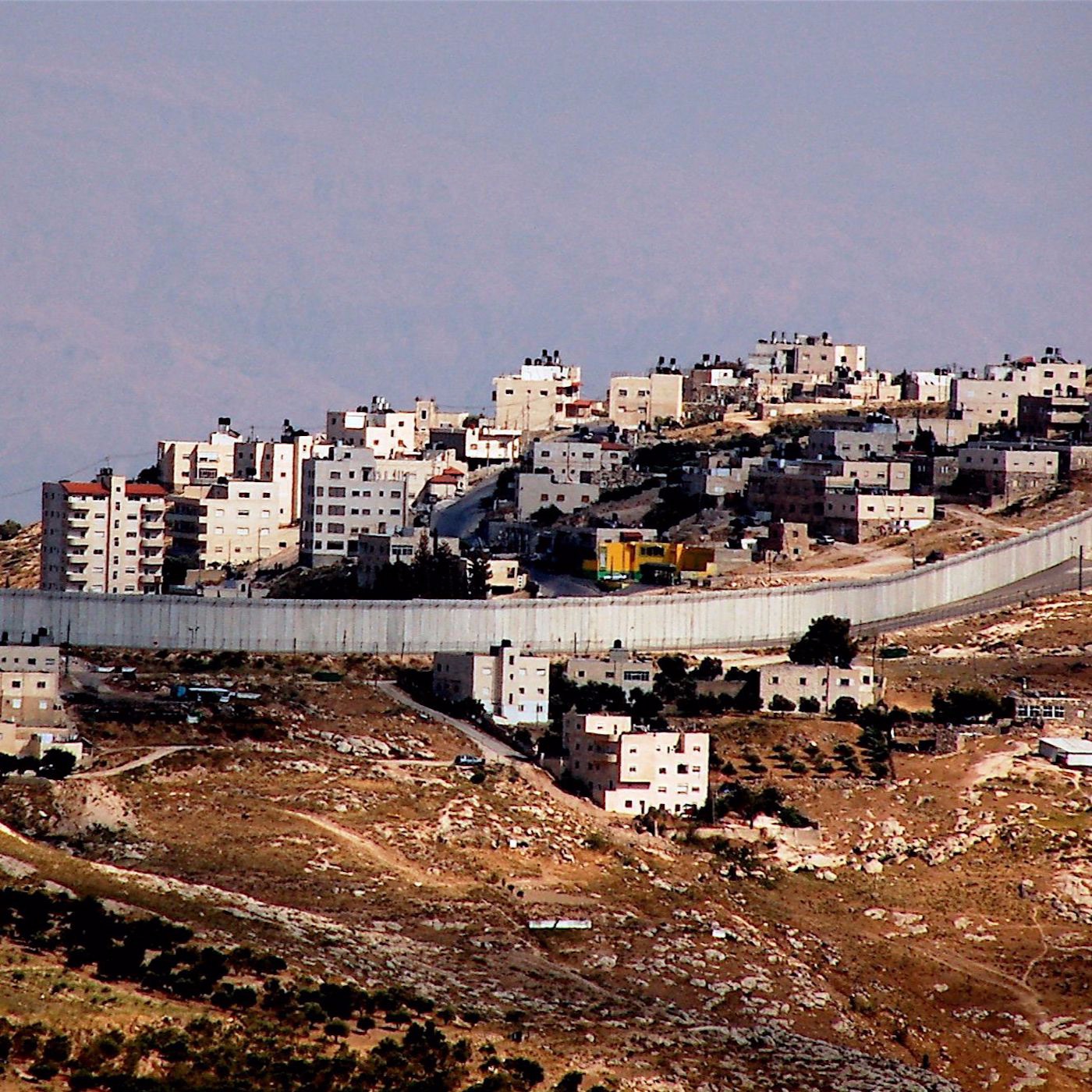
Occupied Thoughts
Occupied Thoughts by FMEP
PalCast - One World, One Struggle
Tortoise Shack Media
The Palestine Pod
Lara E. and Mikey B.
Palestine Remembered
Nasser Mashni
Palestinians Podcast
Palestinians Podcast

Rethinking Israel, Palestine, and the Faith That Formed Us
Erna Kim Hackett
Rethinking Palestine
Al-Shabaka: The Palestinian Policy Network
Shake the Dust
KTF Press
Sumud Podcast: Inspired by Palestine
Dr. Ed Hasan
This Is Palestine
The Institute for Middle East Understanding
Unapologetic: The Third Narrative
With Amira and Ibrahim
Unpacking Zionism
Institute for the Critical Study of Zionism